Initial Steps of PRA in Malaka Regency
Initiatives to manage transboundary watersheds on Timor Island have again entered an important stage. Through the Timor Island Watersheds (TIWA) Project, the Participatory Rural Appraisal (PRA) process will soon begin in four villages in Malaka Regency, East Nusa Tenggara, namely Alas Utara, Kotabiru, Alas, and Alas Selatan Villages. This activity is part of a joint step to better understand the conditions, challenges, and needs of the community at the site level as the basis for the preparation of a more contextual and participatory community action plan.
Previously, in 2025, the Inovasi Tangguh Indonesia (InTI) team had collected preliminary data in eight villages where the TIWA program is located in the Talau Loes watershed and the Mota Masin watershed. The data provides an overview of the condition of the village, ranging from the number of people, livelihoods, water availability, to various problems faced by the community. However, the data obtained is considered insufficient to describe in depth the root of the problems and social dynamics that occur in each village. Therefore, PRA is designed as a participatory approach to explore local experiences, knowledge, and community priorities directly.
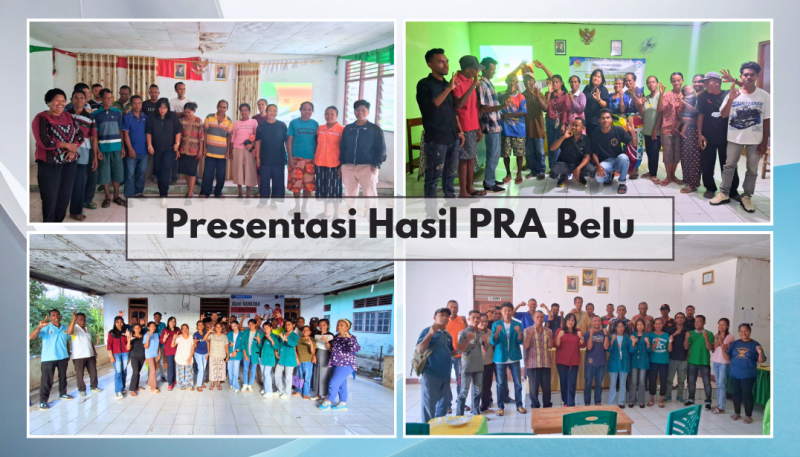
The implementation of PRA in Malaka Regency is scheduled to take place on May 19-22, 2026. Each village will undergo two PRA processes or meetings to ensure that the information extraction process is carried out in a more in-depth manner and involves various stakeholders at the site level including vulnerable and at-risk community groups such as the elderly, women, young people, indigenous peoples and people with disabilities. PRA will also be supported by 2 Community Task Force (GTK) representatives from each village who will be co-facilitators for facilitators from InTI. The co-facilitators are expected to be able to bridge the participatory discussion process, help explore the problems faced by the community, while ensuring that the voices of all community groups can be represented.
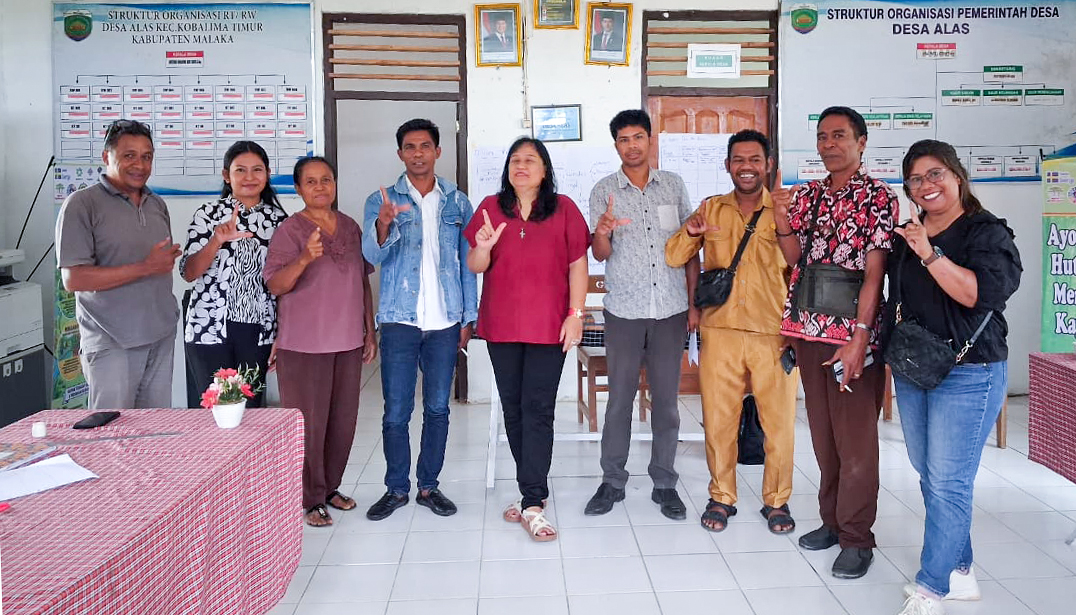
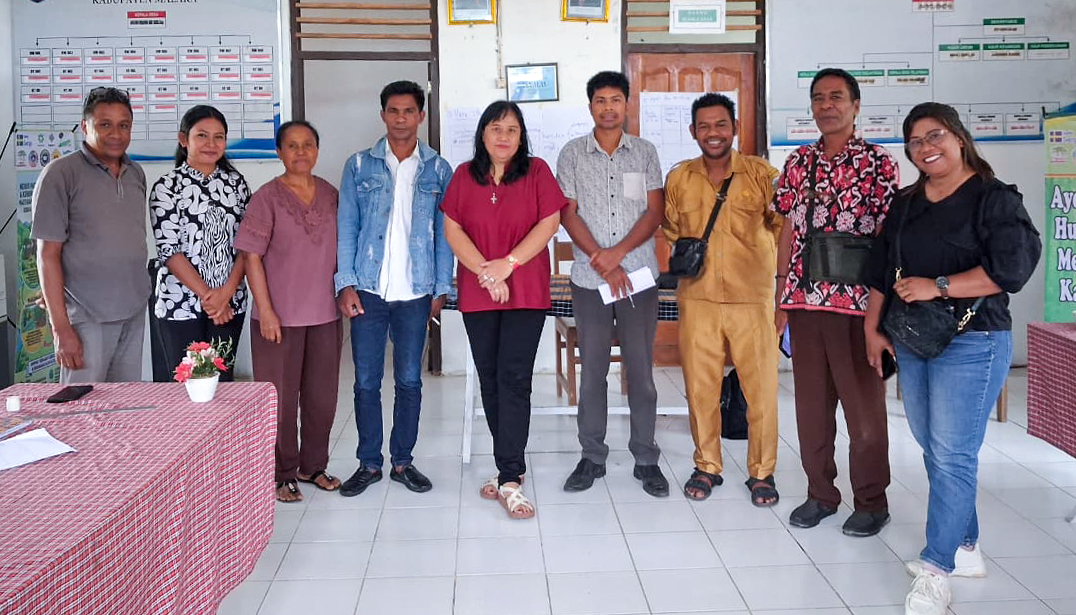
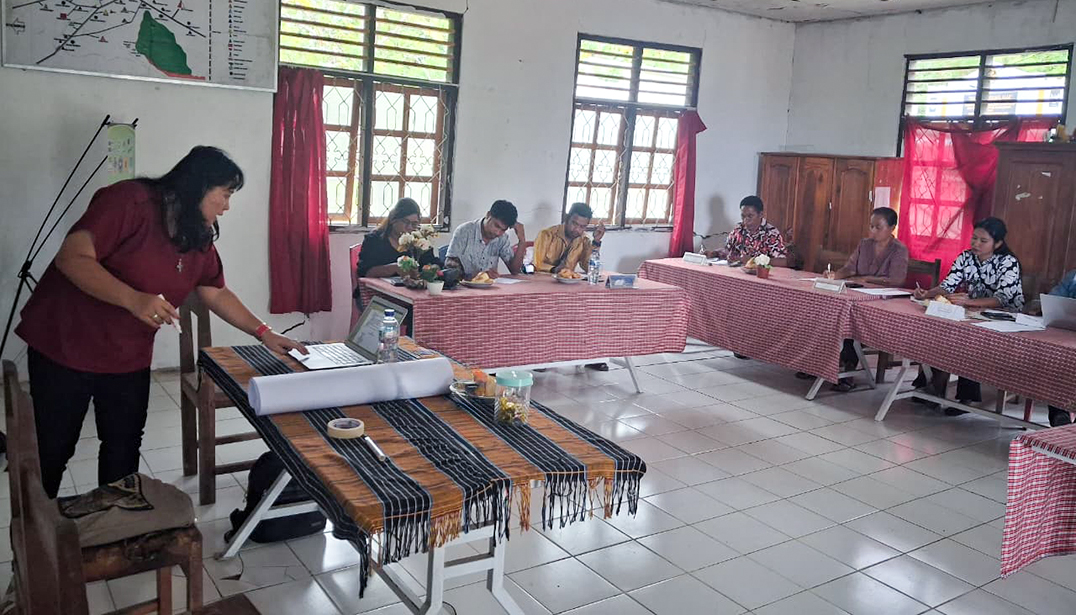
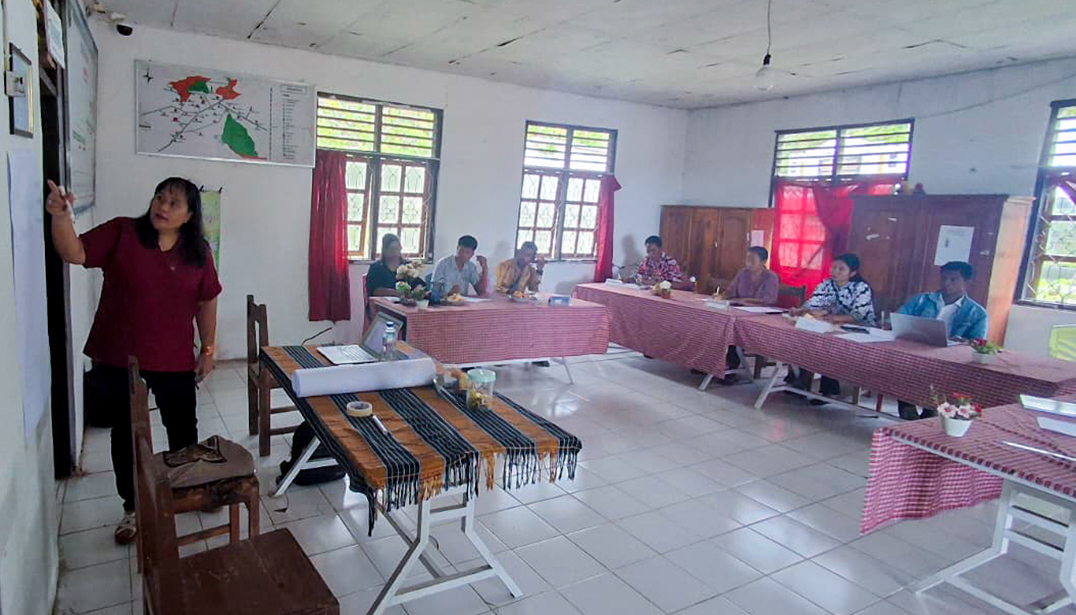
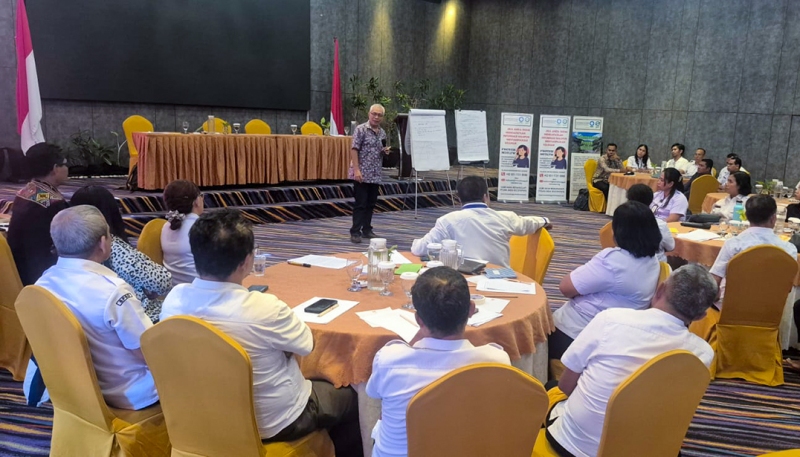
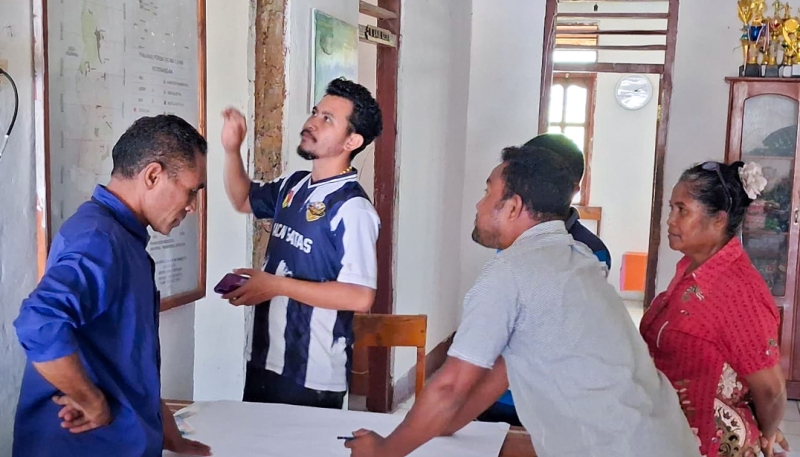
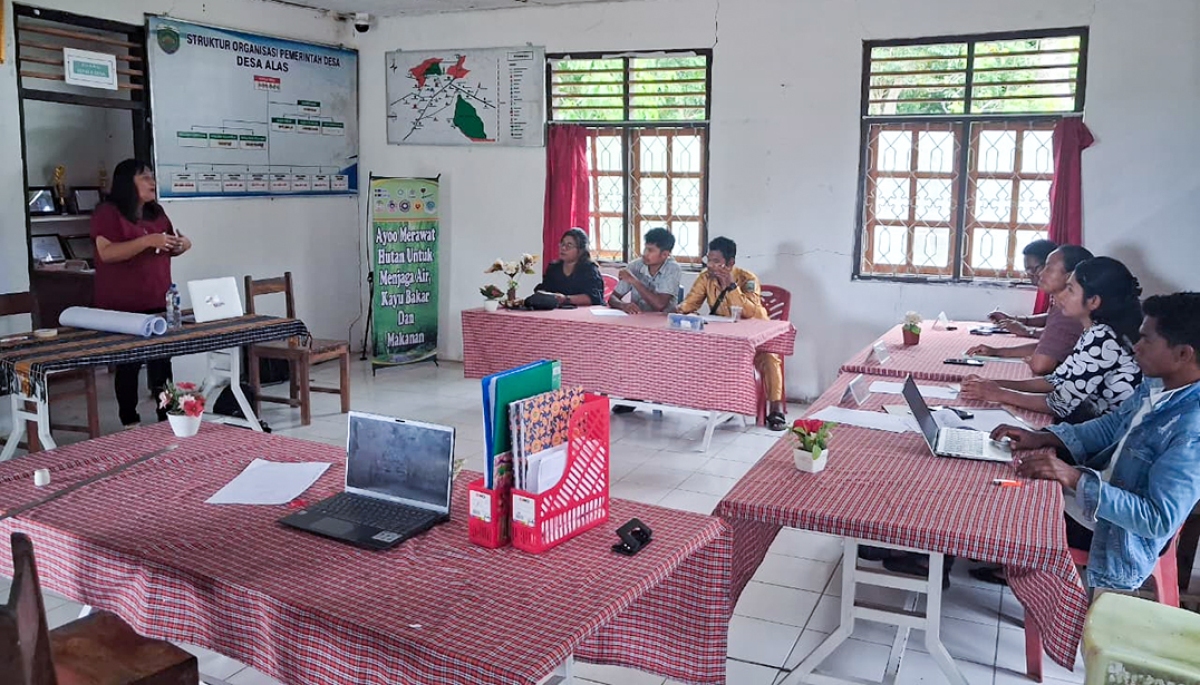
Ahead of the implementation of this PRA, InTI together with the appointed GTK representatives held a GTK Co-Facilitator Meeting at the Alas Village Office on Monday, May 18, 2026. The meeting, which was facilitated by Welem Andi Tana and Augustinna Tuty Indrawaty from InTI, was focused on refreshing and reviewing the PRA training materials that had been given to GTK members in April. In addition to strengthening the understanding of the PRA method, the co-facilitators also prepared technical needs and data that will be used during the process of extracting information in their respective villages.
The data or information that is expected to be produced from the PRA process in the four villages in Malaka Regency is in the form of primary data. For primary data, the co-facilitators were refreshed about the PRA study tools that will be used in the field, such as village transect roads, village mapping, village history and risks, seasonal calendars, problem trees, ranking and scoring, to institutional venn diagrams.
Through this series of PRAs, the TIWA Project not only wants to get the data needed, but also encourages the active participation of village communities in determining the direction of development in their respective villages. It is hoped that the recommendations for activities that will be prepared will be truly born from the needs and experiences of residents, while supporting more inclusive, sustainable, and community-friendly watersheds management in border areas. (InTI)