Bringing TIWA’s Experiences to the Global Stage: InTI at IWC11
How the Timor Island Watersheds project is contributing to global discussions on community-led solutions and transboundary water management. Managing watersheds shared by two countries requires more than environmental solutions. It also depends on effective coordination, meaningful community participation, and institutions that can work together across administrative and national boundaries. A key question is how local priorities and initiatives can become part of wider watershed management efforts and receive the support needed to continue.
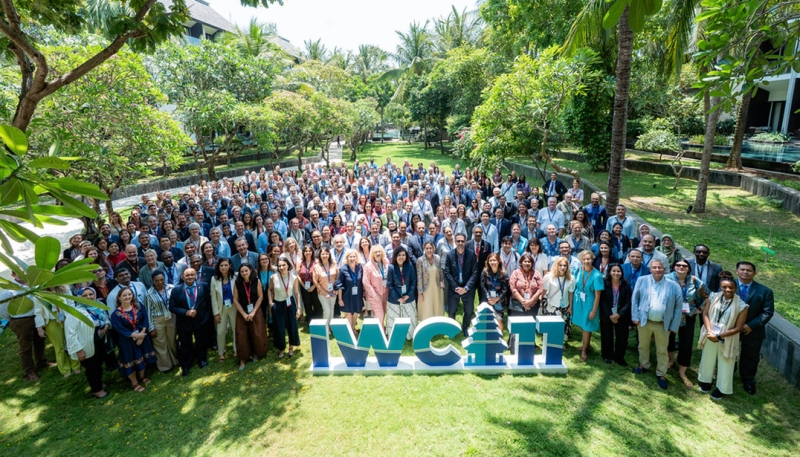
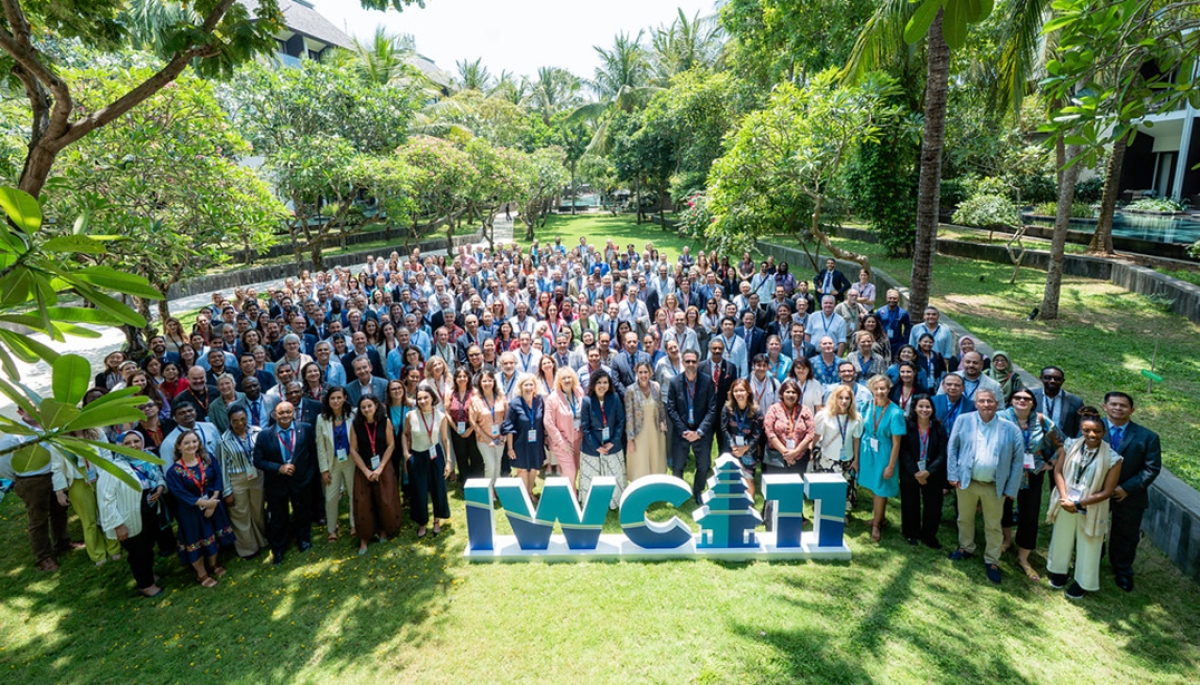
These issues were part of the discussions at the 11th GEF International Waters Conference (IWC11), held at Anvaya Resorts in Bali from 19–22 October 2026. Representing Inovasi Tangguh Indonesia (InTI) and TIWA project, Johan Rachmat Santosa, Indonesia Technical Lead, brought experiences from the project into several conference discussions.
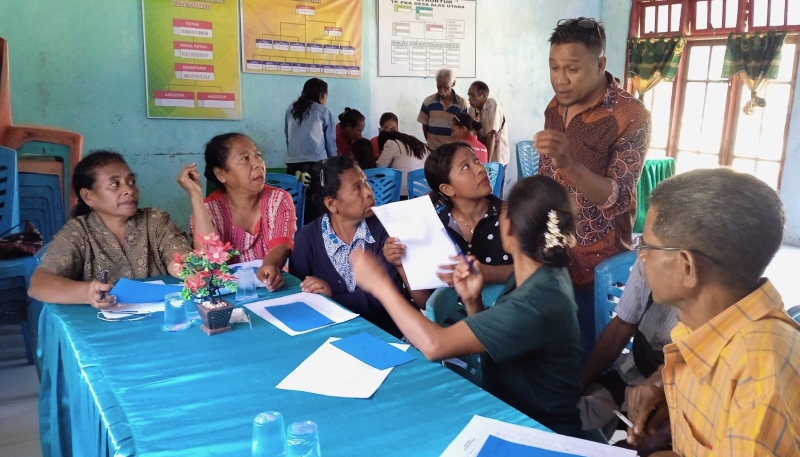
“At IWC11, TIWA shared good practice on participatory approaches through Participatory Rural Appraisal, and on using the Transboundary Watershed Working Group as a multi-stakeholder platform to expand Good Agricultural Practices (GAP) on dryland agriculture across the watershed.” – Johan Rachmat Santosa.
Communicating results with a clear purpose
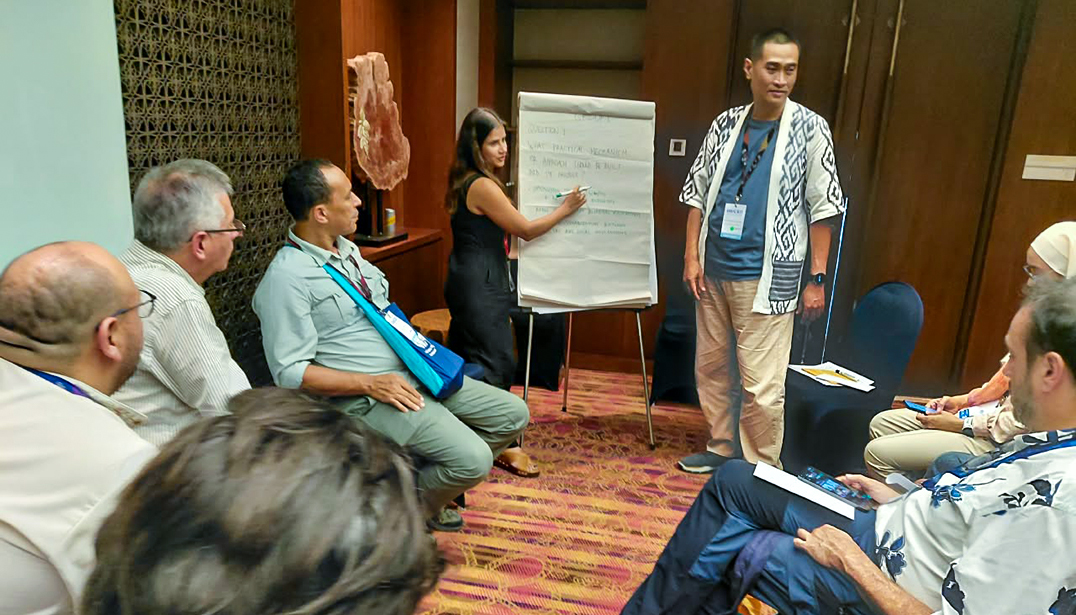
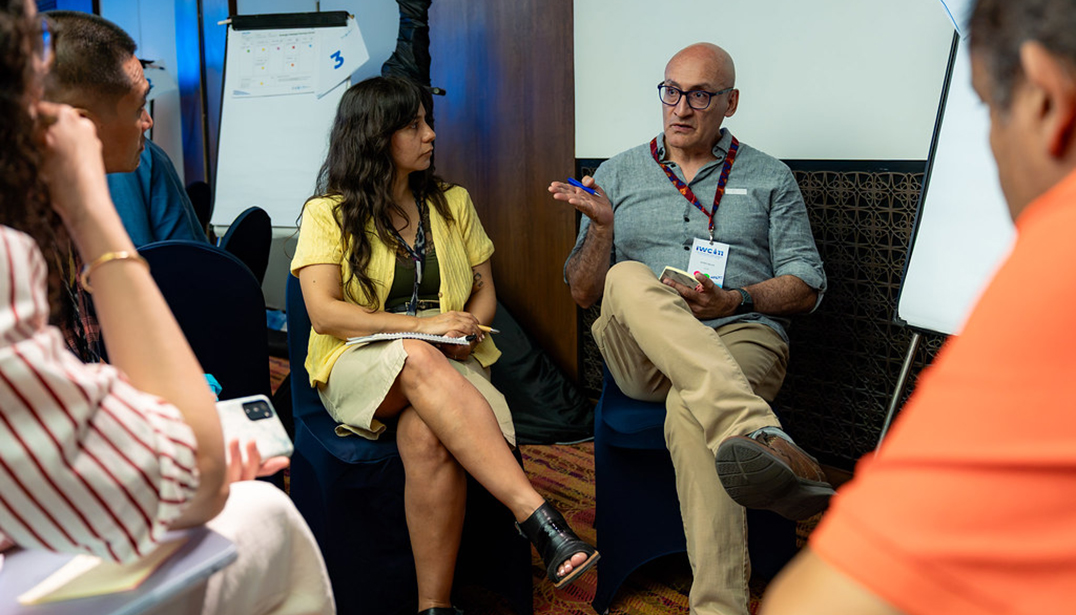
Before the conference officially began, Johan joined the Strategic Communications Pre-Conference Workshop on 18 October 2026, organised by IW:LEARN and GRID-Arendal with support from the GEF Secretariat Communications Team. The workshop brought together around 100 participants to explore how communication can help projects achieve their intended results. Rather than focusing only on how to communicate project activities and achievements, the discussion encouraged participants to consider what communication should help make happen next. This means connecting evidence with policy decisions, bringing local solutions to the attention of potential supporters and investors, and ensuring that project results reach people who can influence decisions (Maria Dalby’s Making Communication Count: From Project Results to Real-World Impact).
Participants explored these ideas through the Strategic Message Framing Canvas. The exercise guided them to identify the results they wanted to communicate, understand why those results mattered to specific audiences, and consider what action or support they hoped to encourage. TIWA was one of the project examples used in the group exercise. The discussion highlighted an important point: communication is not simply about reporting what a project has done. It can also help create the conditions for its results to be recognised, supported, and carried forward.
From community initiatives to basin-level cooperation
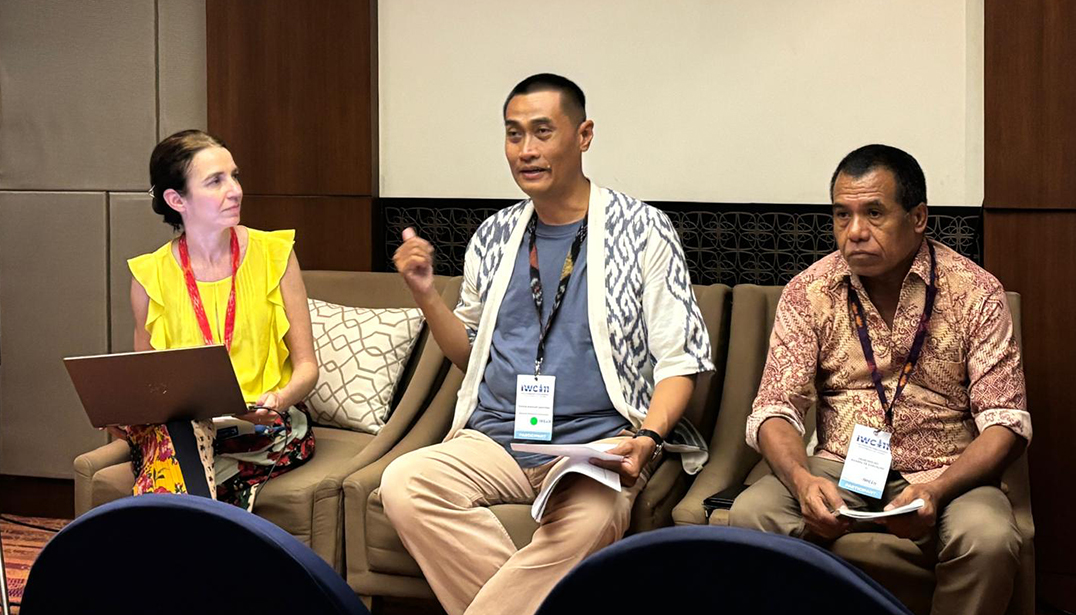
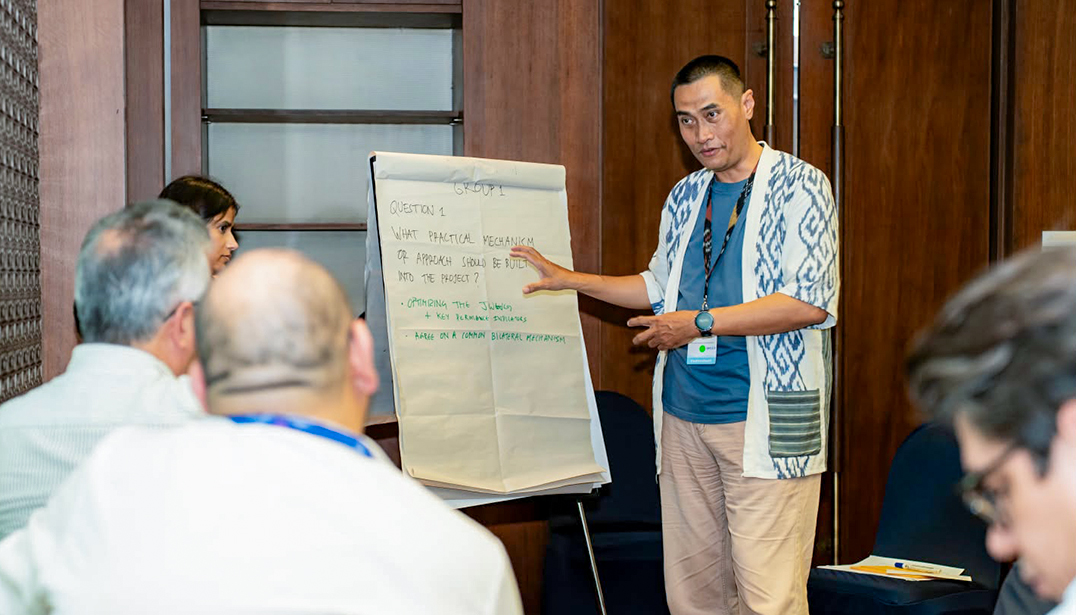
On 21 October, InTI brought its watershed experience into Clinic 6, How to Scale and Sustain Action Across Transboundary Basins: Lessons from Indonesia–Timor-Leste and Argentina–Bolivia. Johan co-led the session with Delfina Iervolino from the Organization of American States (OAS), while Demetrio Do A. De Carvalho from Conservation International Timor-Leste contributed to the discussion. The clinic provided a space to compare experiences from the Talau–Loes and Mota Masin watersheds and the Bermejo Basin, shared by Argentina and Bolivia. Despite their different geographical and institutional contexts, both experiences raised common questions about how local initiatives can contribute to wider basin management and how cooperation can be sustained across boundaries.
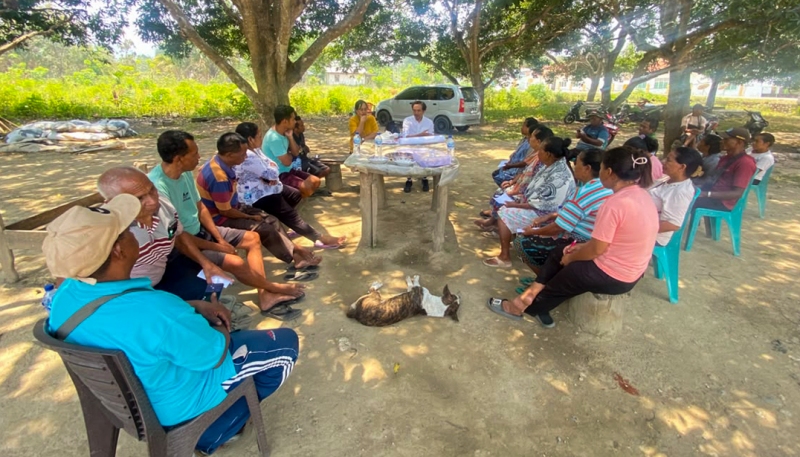
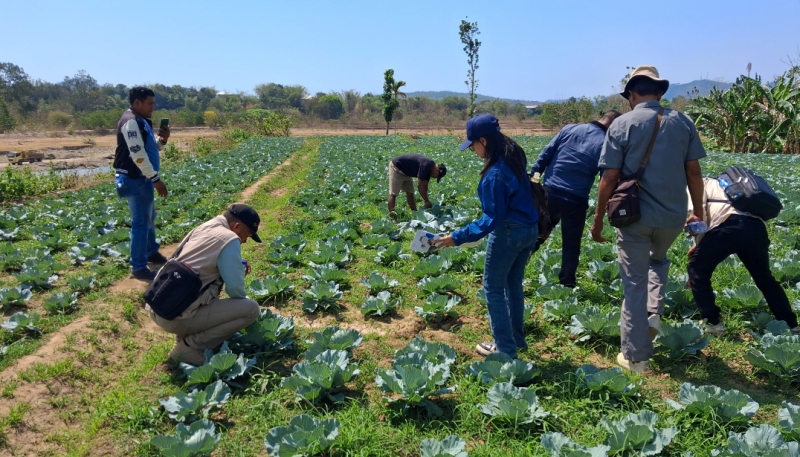
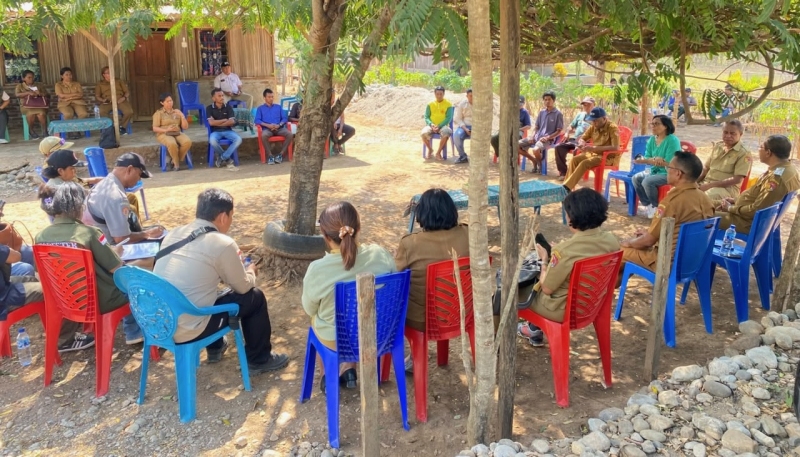
From the Indonesian side of TIWA, Johan shared how Community Task Forces (CTFs), whose members had received training in Participatory Rural Appraisal (PRA), supported communities in eight target villages to identify local challenges and priorities, including agricultural productivity and water management. These community processes have been accompanied by practical activities such as Good Agricultural Practices (GAP) and 3Rs Water Management: Recharge, Restore and Reuse. These initiatives serve as early actions, or Quick Wins, that respond to needs identified at the community level. The discussion also explored ways to extend and sustain these practices through existing networks and institutions. Agricultural Extension Officers (PPLs), GAP teleconsultation, knowledge-sharing among CTFs, and the Joint Forestry Working Group (JFWG) are among the pathways being developed to connect local initiatives with wider government and community networks.
Experiences from Timor-Leste added another perspective. Through Participatory Land Use Planning (PLUP), communities identify land-use and environmental degradation challenges, document local ecological knowledge and practices, and develop Future Land Use Plans and community action plans related to water, food, and livelihoods. Initiatives such as Tara Bandu and Community Conservation Groups also help connect communities with government and technical institutions.
The exchange with the Bermejo Basin experience brought several practical considerations into focus. Transboundary cooperation needs more than formal agreements or the establishment of joint institutions. It requires clear mandates, defined roles and responsibilities, effective coordination mechanisms, and measurable indicators to ensure that commitments translate into action. The discussion also emphasised the importance of involving multi-stakeholders from the beginning. Such collaboration helps align priorities and build a shared agenda for basin management. Equally important is ensuring that community-led initiatives can continue beyond direct project support. The exchange showed that scaling up does not mean simply replicating an activity in another location. It means adapting solutions to local conditions while strengthening the institutions and partnerships needed to support them over time.
Why community knowledge and ownership matter
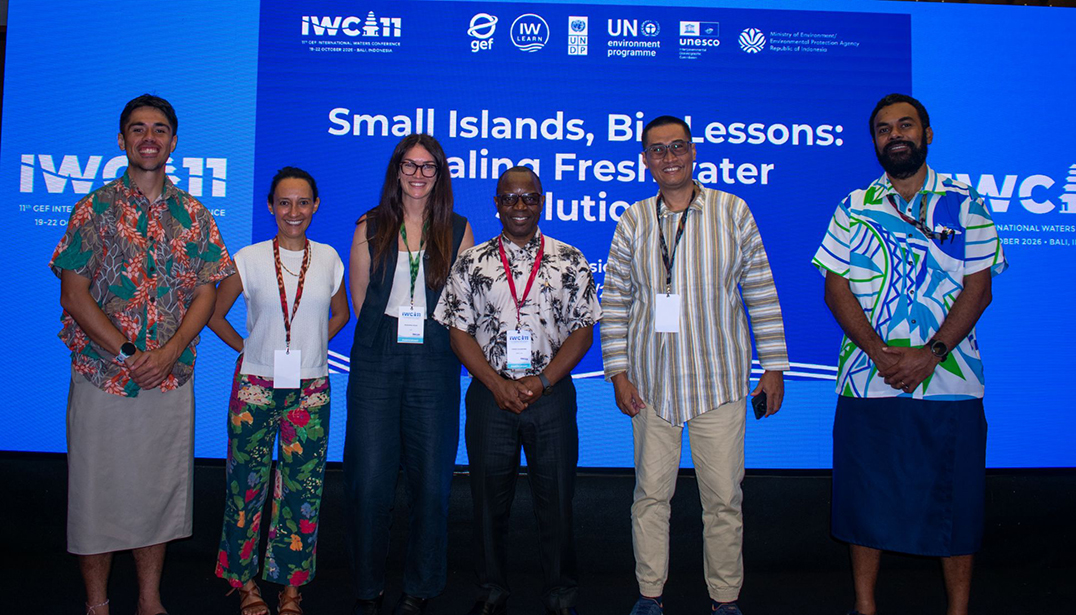
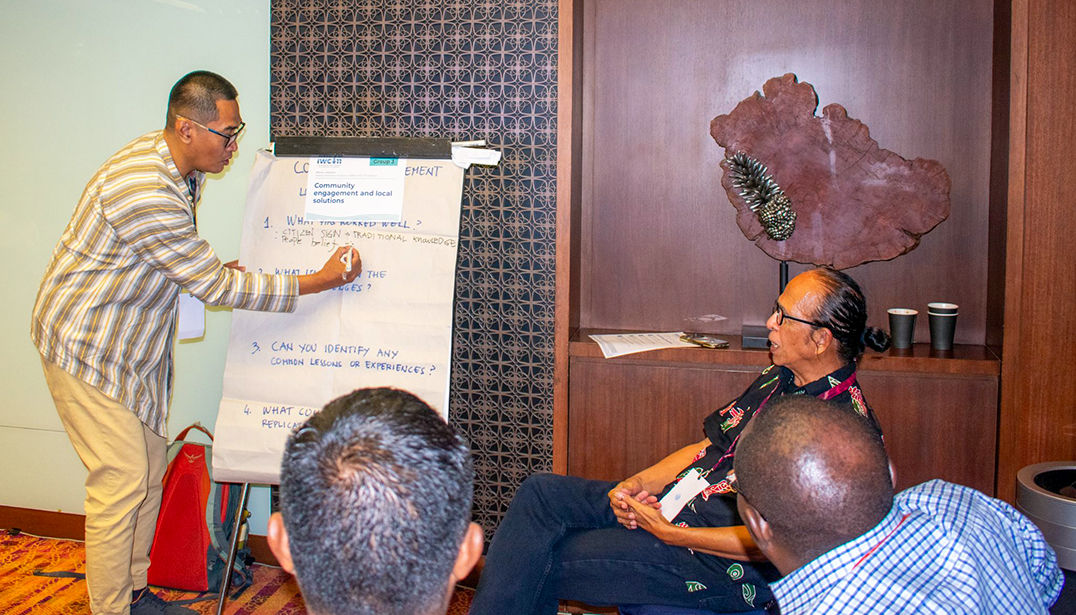
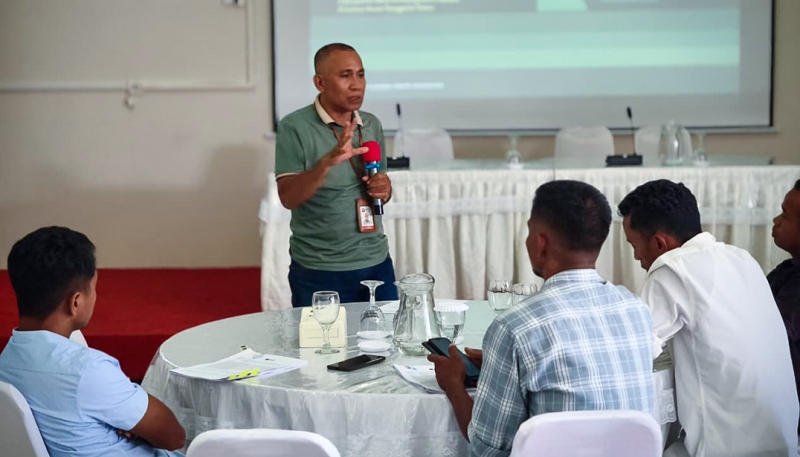
Community participation was also central to Special Session 5, Scaling Freshwater Solutions in SIDS – A GEF IW Dialogue, held on 22 October. Johan served as table host for Theme 3, Community Engagement and Local Solutions, contributing perspectives from TIWA to the discussion. The exchange highlighted how community-led solutions are more likely to gain acceptance when they recognise traditional knowledge, local wisdom, beliefs, practices, and livelihood priorities. Meaningful participation means giving communities an active role in shaping decisions, not just involving them in activities. Communities need meaningful opportunities to contribute to decisions and shape solutions that affect their lives.
The discussion raised questions about how community-led structures can remain active, how communities can be involved meaningfully in monitoring and evaluation, and how to balance locally preferred solutions with the changes that projects seek to achieve. These points are relevant to TIWA’s approach in Belu and Malaka. Participatory processes such as PRA and PLUP can help bring community perspectives into watershed planning and management from the beginning and put the community in a driver position. Using language and concepts that relate to people's daily experiences and livelihoods can also make discussions more accessible and encourage meaningful participation. This session was also published at Conservation International’s Linkedin post in the following link: https://lnkd.in/p/gQxMyXwR.
From local initiatives to sustainable transboundary cooperation
For InTI, the conference was an opportunity to bring experiences from Belu and Malaka into international discussions, while also learning from approaches applied in other transboundary basins and island contexts. The exchanges highlighted that there is no single model for managing shared water resources. Solutions need to respond to local conditions while connecting community efforts with wider decisions, partnerships, and resources.
“IWC11 was a cross-program learning platform supported by the GEF and International Waters. It gave me new knowledge from good practices across programs, including practical knowledge to make TIWA’s communication strategy more effective. I will share this with the TIWA project management team and the Joint Transboundary Watershed Management Working Group members.” – Johan Rachmat Santosa
As TIWA continues its work in Indonesia and Timor-Leste, these lessons provide useful perspectives for strengthening community participation and cooperation across the watersheds. They also reinforce why local experience matters: it can inform wider discussions and help shape more inclusive and sustainable approaches to managing shared freshwater resources. (InTI)
_______
Note: IWC11 is the GEF’s biennial conference on international waters—the 11th edition—with the theme “Shared Waters, Transformative Solutions: Facilitating Systemic Change.”
Reference: Maria Dalby, “Making Communication Count: From Project Results to Real-World Impact” — https://news.grida.no/making-communication-count?source=share-gridarendal
Photo Credit: Triple E Bali, IW:LEARN, Conservation International