Strategic Join for Environmental Conservation of Two Countries
Watersheds are a hydrological unit in the form of an intact landscape starting from a forest cover area for rainwater catchment upstream, where the water is flowed through rivers and their tributaries in an area separated by topographic boundaries in the form of mountains, hills and cliffs from other hydrological units to water utilization areas in the middle and downstream to the ocean and lakes. As a hydrological unit, the boundaries of the Watershed Area are different from the boundaries of administrative areas, whether villages, sub-districts, districts, provinces or even countries. As an ecosystem, watersheds consist of physical components in the form of soil, water and rocks and biotic components in the form of vegetation and humans as well as social and economic components so that their governance must be integrated across sectors. Through the Timor Island Watersheds (TIWA) program, Indonesia's Resilient Innovation with support from Conservation International (CI) – Global Environment Facility (GEF), supports the Directorate of Watershed Management Planning and Evaluation (PEPDAS) of the Directorate General of Watershed Management and Forest Rehabilitation (PDASRH) of the Ministry of Forestry of the Republic of Indonesia wants to ensure transboundary collaboration in managing watersheds on the border of Indonesia and Timor-Leste which currently shares 8 Transboundary Watersheds can be realized in the future to support the achievement of Sustainable Development Goals (SDGs) 6.5.2 on shared water governance in Indonesia and Timor-Leste. With the realization of this collaboration, it is hoped that there will be changes in the governance of the transboundary watershed for the better so that food and water security in the border watersheds, especially the Talau-Loes and Mota Masin watersheds, can be achieved, which will ultimately support the sustainability of livelihood activities and people's lives in the border watershed area of Indonesia and Timor-Leste.
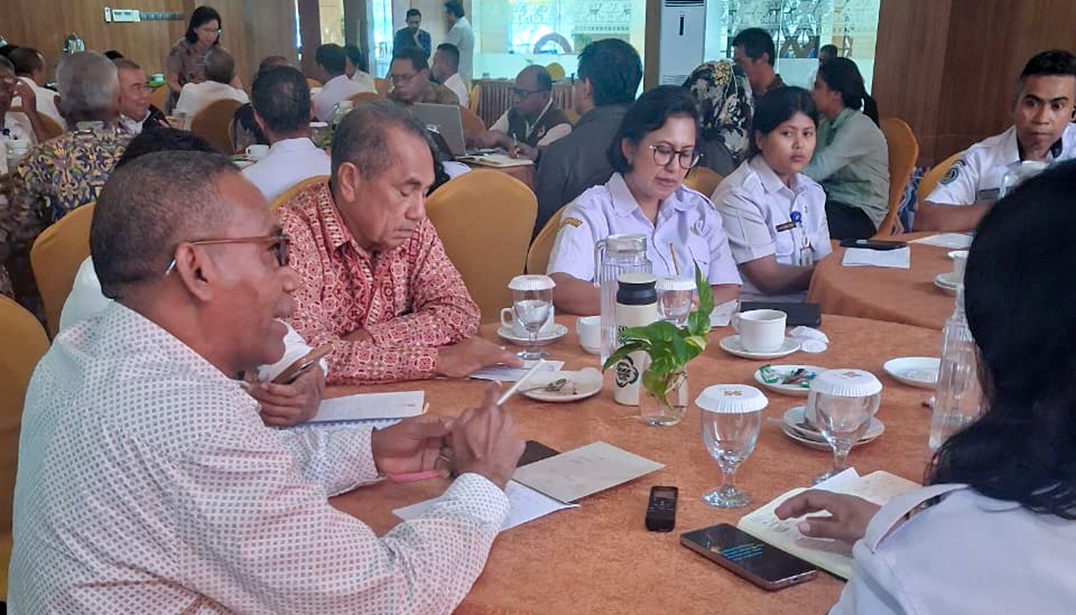
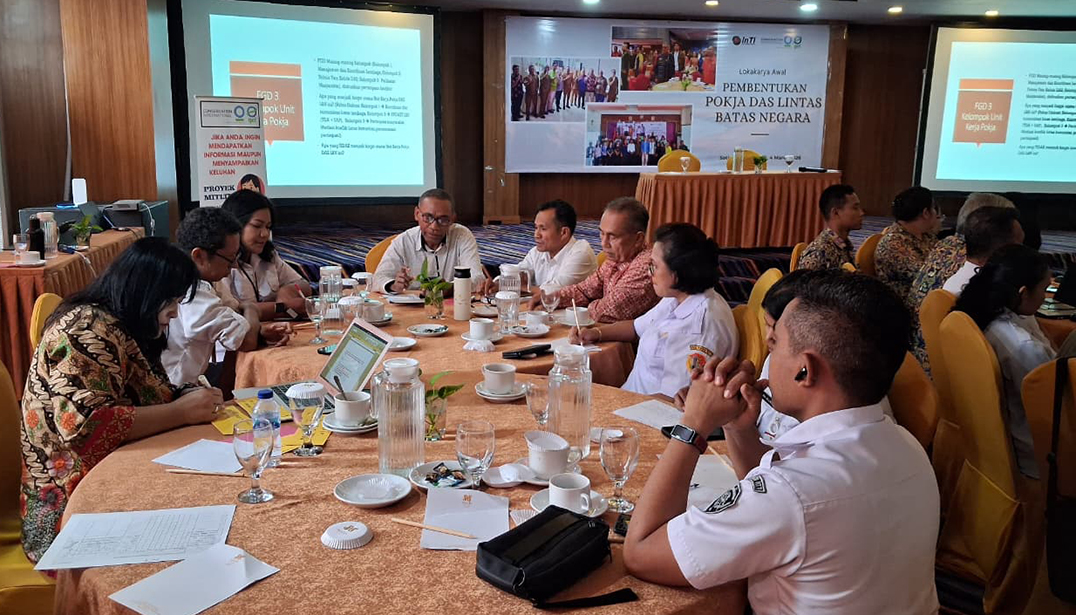
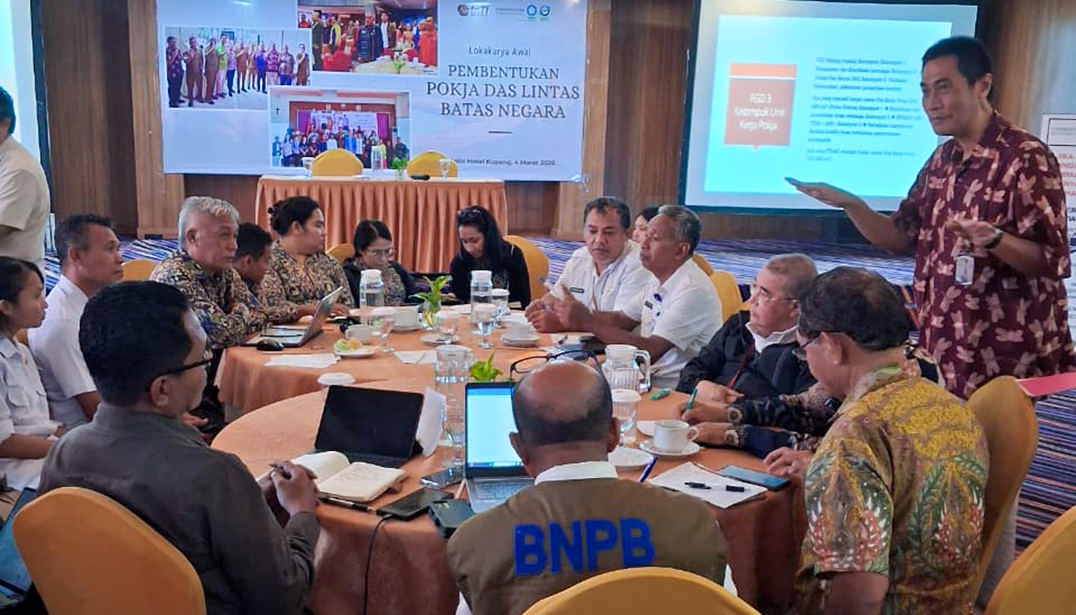
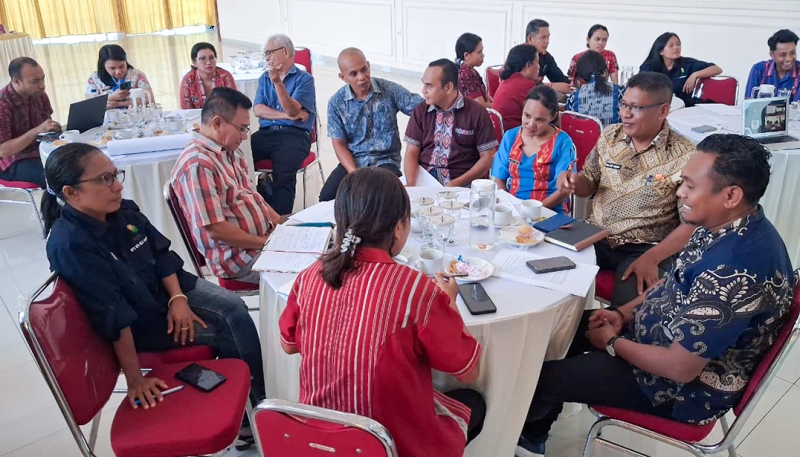
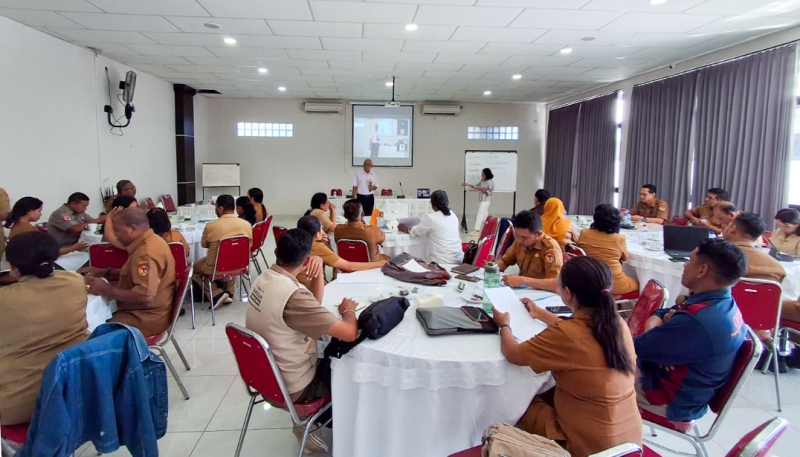
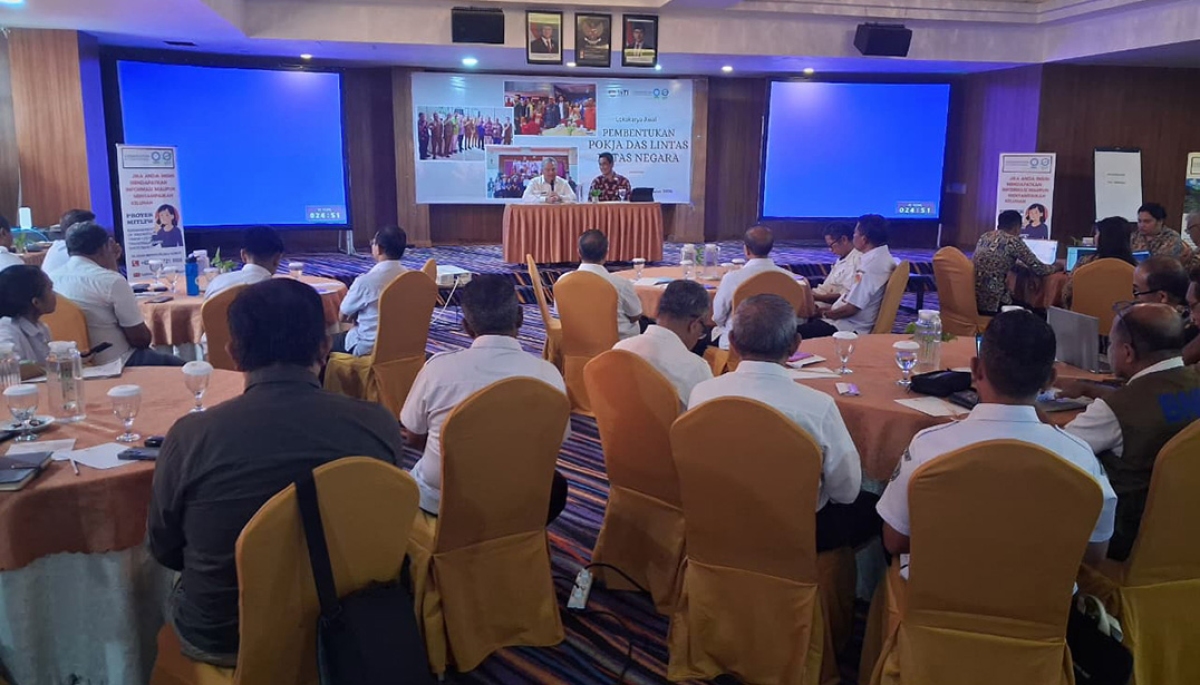
On Wednesday, March 4, 2026, at the Sottis Hotel, Kupang, East Nusa Tenggara, Inovasi Tangguh Indonesia (InTI) facilitated the Initial Workshop on the Formation of the Transboundary Watershed Joint Working Group (POKJA DAS LBN) at the NTT Provincial level. Previously, similar workshops were held for the establishment of the Transboundary Watershed Working Group at the district level, namely the Transboundary Watershed Working Group in Belu Regency and the Transboundary Watershed Working Group in Malaka Regency. In the future, the LBN Watershed Working Group is expected to be able to become a strategic bridge between the two countries to manage the transboundary watershed, ensuring the availability of resources for food and water security while mitigating disaster risks, especially hydrometeorological disasters related to climate change that can threaten the community and their livelihood assets in the transboundary watershed area.
In his opening, Dr. Alfonsus Theodorus. ST, MT., who during the workshop served as the Head of the NTT Provincial Bapperida, said that, "The management of Transboundary Watersheds is a big issue so it is necessary to realize concrete steps in both countries by succeeding in various strategic aspects. The Transboundary Watershed Working Group is also expected to be a forum to maintain and support environmental conservation."
Meanwhile, Johan Rachmat Santosa, Technical Lead Indonesia from InTI conveyed the process built by the program up to the initiation stage of the formation of the Transboundary Watershed Working Group at various levels of government as well as the initiation stage of the initiation of the formation of the Talau Loes Watershed Community Task Force and the Mota Masin Watershed since early January 2025.
"This workshop is a continuation of the stakeholder mapping and analysis activities as well as the Transboundary Watershed governance policy that has been carried out by InTI since mid-2025 as well as the audience of the results of the stakeholder mapping study to all stakeholders of prospective Pokja functionaries which was held in November 2025," Johan explained.
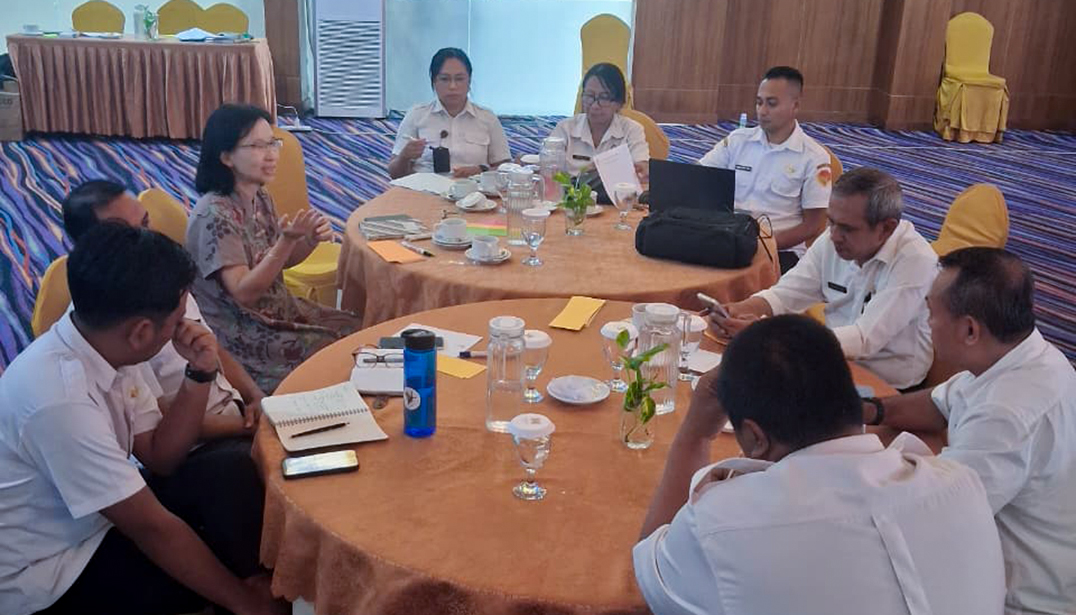
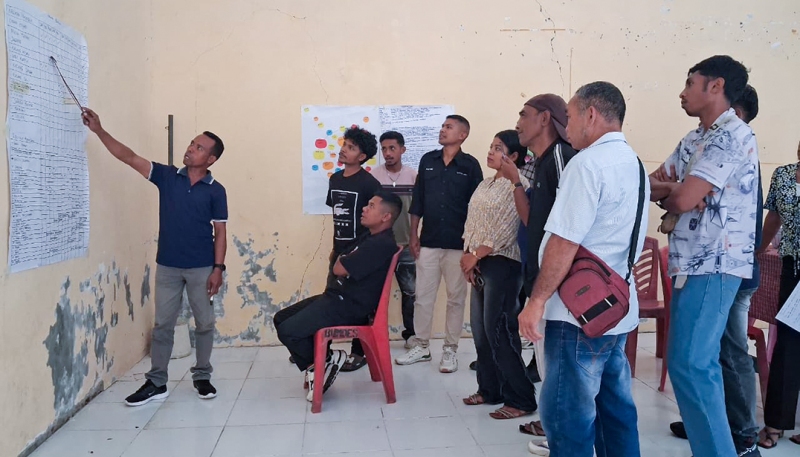
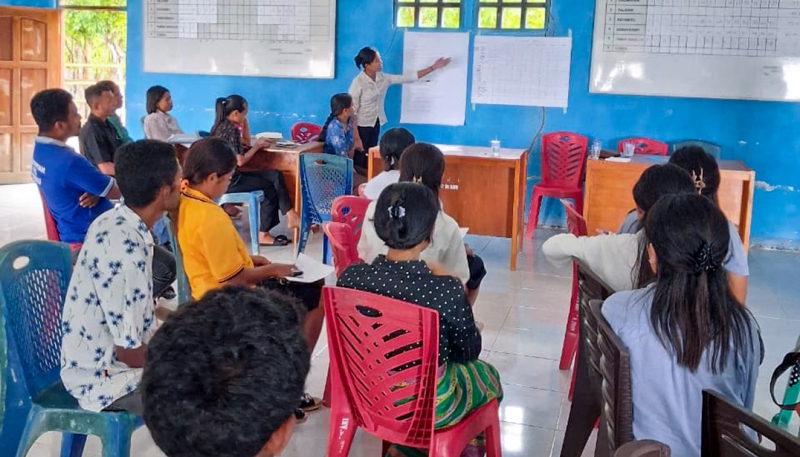
In the workshop process, the participants were divided into 3 discussion groups with different topics, namely: 1) Management and Coordination of Transboundary Watersheds, 2) Technical Areas of Transboundary Watersheds, and 3) Community Involvement.
Group 1, facilitated by Phoebe Pandyopranoto, Project Lead Coordinator of InTI, discussed the topic of Management and Coordination of the Transboundary Watershed Working Group. The group agreed that the Main Tasks and Functions of the Watershed Working Group Management are the same as management functions in general, namely, planning, organizing and institutionalizing strategies on how to implement action plans, implementation of action plans, monitoring, and evaluation. These functions will be aligned with the TUSI (Task Functions) of each member institution of the working group.
The group also discussed the basis for the policy of establishing a Working Group that can be chosen, namely using the existing policy where the Working Group is part of the JBC (Joint Border Committee) managed by the Ministry of Home Affairs at the national level and the BLC (Border Liaison Committee) at the provincial level. Especially included in the Technical Subcommittee for Water and River Management in JBC. However, this arrangement needs further discussion because there are other basic policy options that are also possible for the basis for the determination of the Transboundary Watershed Working Group, such as Ministerial Regulations (Permen), Coordinating Minister Regulations (Permenko), Joint Decrees (SKB) of several Ministers and Joint Ministerial Regulations (PBM) and Presidential Regulations.
Regarding the coordination mechanism, the Regional Border Management Agency (BPPD) of NTT Province offered to take advantage of the Communication Forum and the Border Thematic Planning System (Sipermata) that BPPD already has. BPPD uses these 2 instruments for planning and controlling development at the border together with other Regional Apparatus Organizations (OPD); some of the OPDs are members of this Working Group.
Group 2, Watershed Technical Field, facilitated by Johan Rachmat Santosa, Technical Lead Indonesia from InTI, which involved representatives from the Faculty of Agriculture UNDANA, BPDAS Benain Noelmina, BBWS Nusa Tenggara II, Bapperida NTT Province, and BPBD NTT Province, has formulated three main tasks and functions (tupoksi) of the Technical Field of the Transboundary Watershed Working Group in NTT Province, namely the implementation of technical studies, technical assistance, as well as monitoring and evaluation. Regarding the implementation of Technical Studies, the Working Group is committed to carrying out periodic watershed technical studies such as Watershed Characteristics Studies and Transboundary Diagnostic Analysis (TDA) as the main foundation for the preparation of the Integrated Watershed Management Plan (RPDAST) and other Strategic Action Plans. This study was carried out comprehensively by integrating important indicators including topographic boundaries, soil and water conditions, ecosystem health, infrastructure, to socio-cultural aspects, food security, disaster risk, and climate change to ensure the availability of accurate up-to-date data.
Furthermore, the Working Group on Watershed Technical Affairs is responsible for facilitating the preparation of Strategic Action Programs or Plans as well as providing direct technical assistance in the implementation of various priority plans in the Transboundary Watershed area. To ensure the sustainability and effectiveness of governance, efforts will also be made to increase capacity through monitoring mechanisms and technical evaluation of the implementation of RPDAST which is carried out periodically and measurably. This entire series of processes ensures that the policies taken are not only based on strong technical data, but also able to adapt to field dynamics for the preservation of the LBN Indonesia and Timor-Leste watersheds.
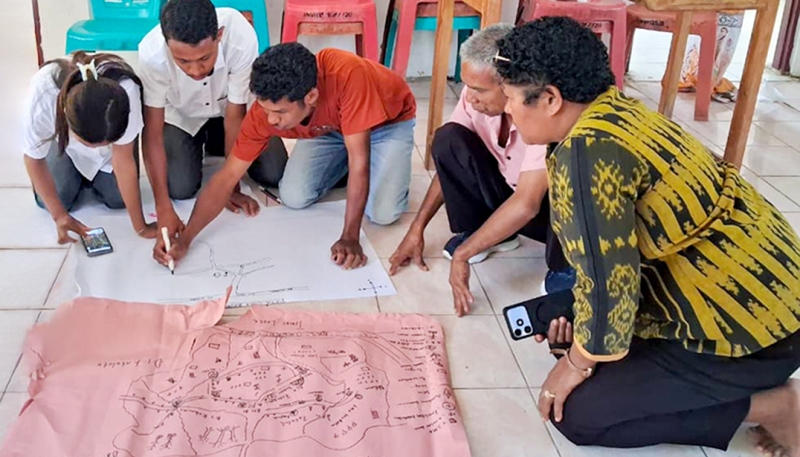
Furthermore, in an effort to strengthen participatory watershed management, Group 3, which discusses Community Involvement, formulates a strategic mechanism for community involvement in the performance of the Provincial Working Group. Facilitated by Augustinna Tuty Indrawaty, InTI's Program Safeguarding and Protection consultant, the main focus of this group is directed at strengthening institutional aspects to ensure that every aspiration of the community is well accommodated in the organizational work structure.
In the discussion, it was agreed that two main paths can be taken, namely the formal route and the alternative route. Through formal channels, community involvement is integrated into government programs from the village to the provincial level. This is done by utilizing existing fostered groups under the auspices of various OPDs, such as the Forest Farmers Group (DLH), Disaster Resilient Villages or DESTANA (BPBD), to collaboration with Pamtas and the TNI (BPPD). Specifically, in this formal pathway, it is also proposed to include the Transboundary Watershed Management program of the Republic of Indonesia and Timor Leste into the priority program of Development in the Village Medium-Term Development Plan (RPJMDes), Village Government Work Plan (RKPDes) and Village Revenue and Expenditure Budget (APBDes) through the process of the Hamlet Development Planning Deliberation (Musrenbangdus) and the Village Development Planning Deliberation (Musrenbangdes).
On the other hand, alternative channels are present as faster and more transparent communication solutions through the use of digital technology in the form of dashboards, which are in the form of communication line connections using applications that ensure information transparency and are expected to speed up communication flows. The working mechanism of this line relies on the latest data input based on direct information from the community. The information is then validated by a designated focal point to ensure its truth before being disseminated through the dashboard to various related parties. Other alternative participatory media include the involvement of the Watershed Forum and the Talau River Care Community Forum (FORMAPES) into planning in the formal channels above.
As the most effective and synergistic strategy in transboundary watershed management, it was agreed that a tiered institutional flow connects village communities, Community Task Forces (GTK), Regency LBN Watershed Working Group, to the Provincial Transboundary Watershed Working Group. This participatory strategic mechanism places the community as the main subject in directing the implementation of the MITLTW/TIWA program. Through strengthening institutional aspects, the main focus is directed to the active involvement of the community in the entire program cycle, starting from the planning, implementation, to monitoring and evaluation stages, which are carried out through the Community Task Force (GTK) formed in each watershed area, in this case GTK Talau Loes and Mota Masin. This commitment will be maintained through periodic meetings between institutional levels to ensure coordination continues to run in harmony for the welfare of the community and environmental sustainability.
The main result of the Initial Workshop on the Formation of the Transboundary Working Group at the Provincial level was the election of Kludolfus Thuames, S.P., Head of BPDAS Benain Noelmina as Chairman and his deputy was Ir. Maksi Y. E. Nenabu, M.T., Head of BPPD NTT Province. It was also agreed that the POKJA Secretariat will be located at the NTT Provincial Bapperida office. A more detailed and thorough discussion regarding the duties of each field of the Provincial Transboundary Watershed Working Group and its institutions will be followed up immediately through the next workshop. (InTI)