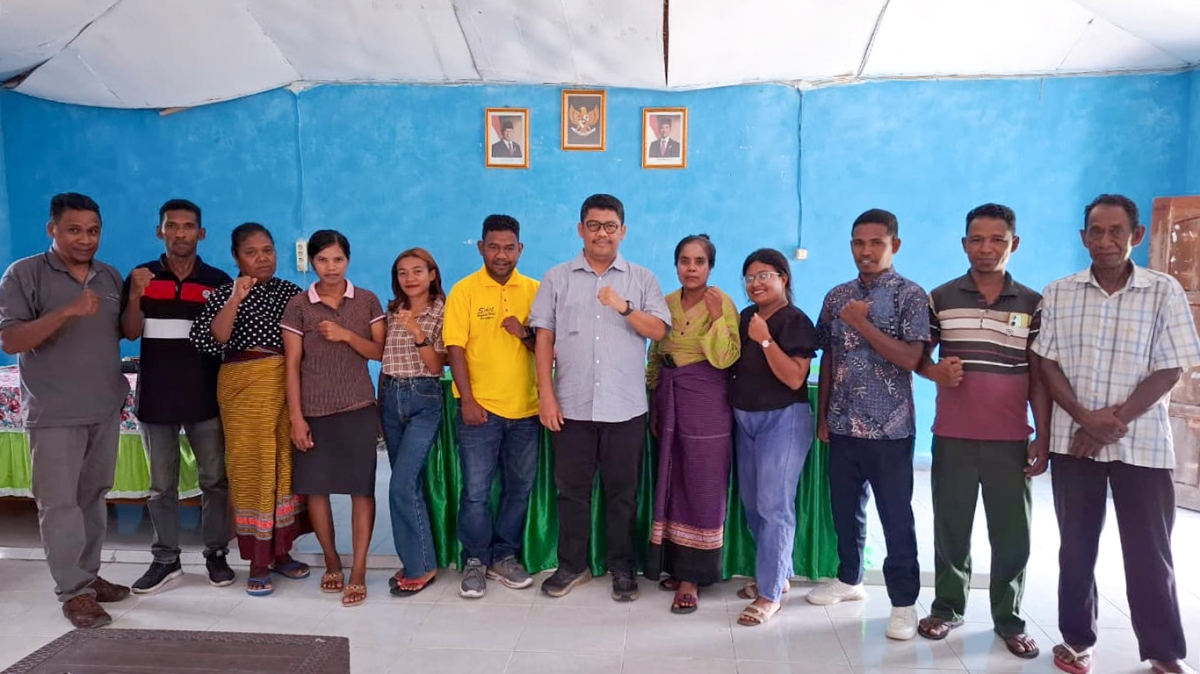
Bentang Lintas Batas #7 - Kota Biru Village
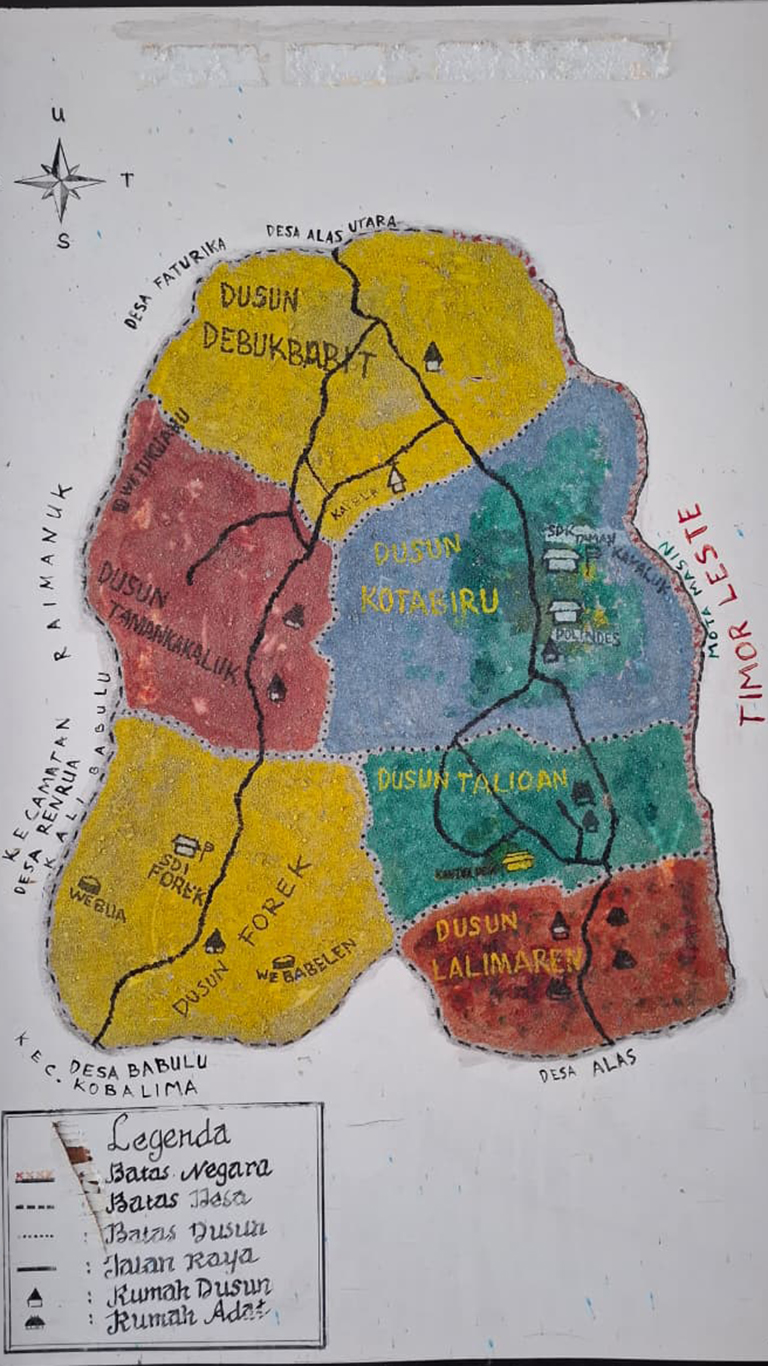
In Kota Biru Village, East Kobalima District, Malaka Regency, the river is not just a landscape, but a shared living space that supports people's daily lives. However, the flow of water will decrease in the dry season where people still need water to water and bathe their livestock. Limited water resources, especially in the dry season, shape people's way of life by sharing and respecting mutual agreements.
It is in this context that customs, communities, and local leadership become the main references. Customary rules regulate the use of rivers and springs, traditional leaders ensure joint compliance, while village heads play a role in maintaining balance so that community unity is fulfilled.
Water as a Shared Living Space
In the Motamasin Watershed Area, the Motamasin and Babulu Rivers are the source of water for the people of Kota Biru Village which are used for daily needs, such as bathing and watering livestock. The use of river water is also regulated through customary agreements so that the community maintains that the river can still be used together, especially in the dry season.
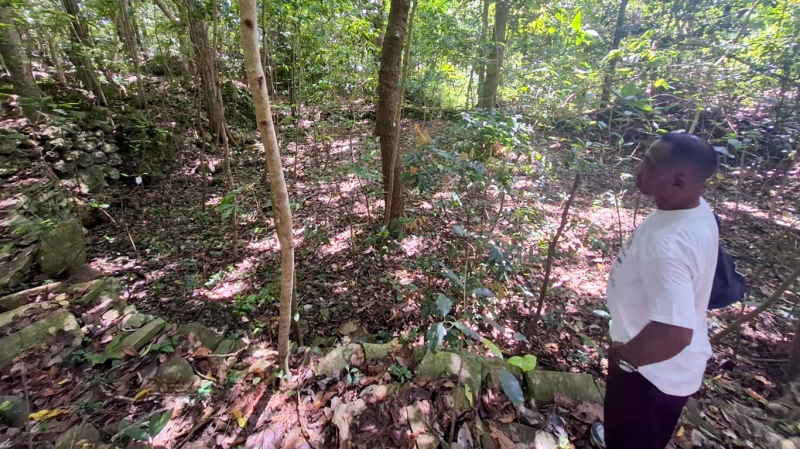
Additionally, there is a forest area that is seen as a space that must be strictly guarded, namely the Sumur Pemali which is a prohibited forest or customary forest. The sources of spring water used by the community are We Bunu and We Kenutu. This area, both customary forest areas and the area around the spring, should not be damaged or used carelessly. Violations of customary rules such as damaging or cutting down trees in the Sumur Pemali, or littering the location around the spring can be sanctioned in the form of customary fines, such as pigs, chickens, rice, or soup. These sanctions are not merely punitive, but rather a symbol that the balance between humans and nature must be restored.
Customary Agreement and Social Life
Social life in Kota Biru Village is bound by the existence of 22 indigenous tribes spread across six hamlets. In daily life, the Traditional Chief is the main reference for the community in resolving social problems, including small disputes between residents. Cases such as theft of plot products are resolved through customary mechanisms with mutually agreed sanctions, without having to directly involve formal officials.
Conflicts related to land ownership almost never occur in Kota Biru Village because the tenure and utilization of land has been regulated through customary agreements that are respected across generations. The government's Complete Systematic Land Registration Program (PTSL) is present in this village, but it does not necessarily replace the role of customs. On the contrary, the formal process runs side by side with customary mechanisms that have long been trusted by the community.
Local Leadership and Learning from the Border
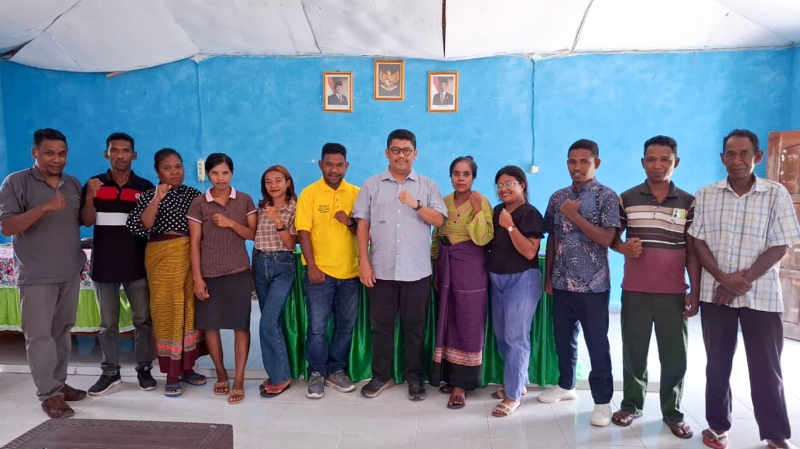
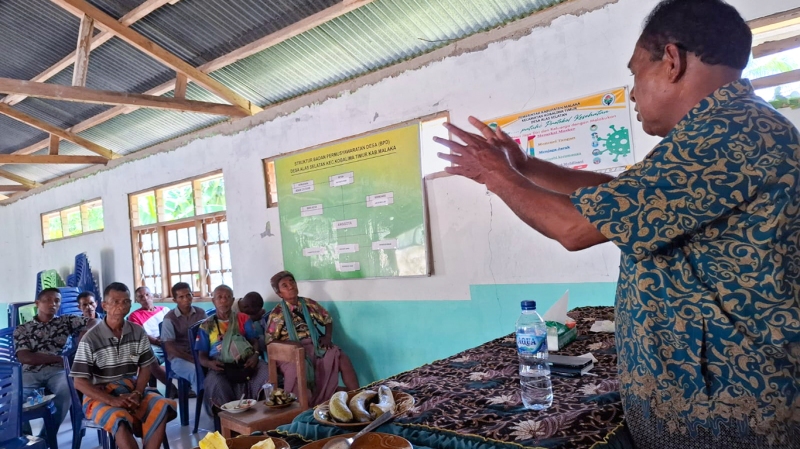
The leadership of Kota Biru Village runs in a wedge between village government, customs, and religion. The Head of Kota Biru Village, Simon Leto, who has a background as an educator, often describes the social life of the village through a parable:
"Life in this village is like an electrical circuit where customs, religion, and the state are the main streams, while formal law serves as a fuse to prevent damage when disturbances occur."
As a village that borders Timor-Leste, the rivers in the Kota Biru are not only a source of life, but also a marker of the country's borders. In the social dynamics of the border communities of Indonesia and Timor-Leste, there are occasional tensions between groups that have the potential to expand if not managed wisely. This condition requires caution and mutual agreement. The practice of community life in Kota Biru Village shows that existing customs, local leadership, and community agreements beyond the administrative boundaries of 2 countries play an important role in reducing these social tensions. Through deliberation, the role of traditional leaders, and village leadership, potential conflicts between border communities can be managed so that they do not develop into a broader problem. These practices are an important source of learning about how communities in the country's border watershed maintain social order and nature conservation.
Bentang Lintas Batas #7 shows that in Kota Biru Village, limitations, especially the limited water source during the dry season and sharing space in the border area with people in neighboring countries, are not barriers, but space to maintain agreements, strengthen trust, and protect nature as part of living together. (Usep Setiawan/InTI)